
bill@vibootech.com
+8618664066083
For frequent travelers, placing a laptop in a separate bin is a routine part of airport security. But have you ever wondered why? And more importantly, can the scanner itself tell the difference between your harmless computer and a similarly shaped explosive device or weapon? The answer is a resounding yes, and the technology behind it is fascinating.
A laptop, a block of sheet explosives, and a thick book can appear as similarly sized, dense rectangles in a basic X-ray image. The core challenge for security systems is to move beyond just seeing a “dense block” to understanding what that block is made of.
Modern X-ray security scanners use a combination of physical properties and intelligent software to make this critical distinction.
1. Material Discrimination (The Colors Tell a Story):
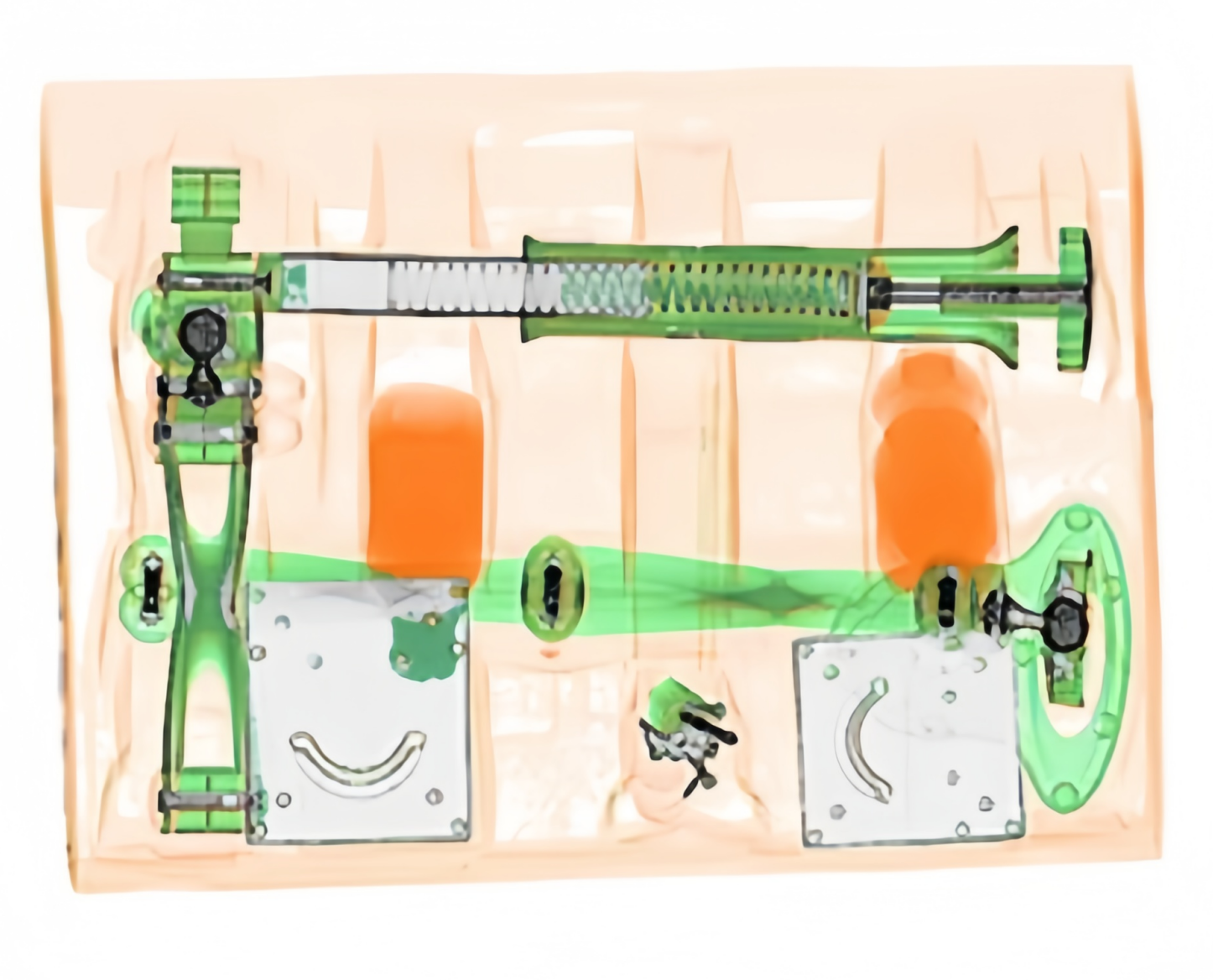
Using Dual-Energy X-ray technology, scanners classify materials by density and atomic number, displaying them in color. A typical laptop shows a distinctive mix:A homogeneous block of explosives, in contrast, would appear largely as a solid mass of organic orange, with a very different internal texture.
Blue/Green: The metallic battery, motherboard, and heat sink.
Orange/Organic: The plastic casing, keyboard, and internal wiring insulation.
2. Shape and Structure Recognition (The Power of AI):
This is where Artificial Intelligence (AI) and Automatic Threat Recognition (ATR) come into play. These systems are trained on millions of images to recognize the specific internal layout of a laptop:When the scanner detects these familiar patterns, it can automatically tag the item as “Laptop” on the operator’s screen, reducing alarm rates.
The recognizable grid of a keyboard.
The rectangular shape of a battery pack.
The pattern of circuit boards and cooling fans.
3. Density and Texture Analysis:
Advanced algorithms analyze the granularity and uniformity of an object’s texture. The complex, layered interior of a laptop creates a varied texture, while many threat materials have a more uniform, grainy, or liquid-like appearance.
If scanners are so smart, why do we still need to take laptops out? The rule exists for two main reasons:
Overlap and Obstruction: When packed in a cluttered bag, a laptop can obscure other items beneath or behind it, creating a blind spot. Placing it alone ensures a completely clear view of everything.
Operator Efficiency: Even with AI assistance, a clearly isolated, easily recognizable item allows the human security officer to verify its safety in seconds, maximizing checkpoint throughput and certainty.
Today’s security scanners are far from simple metal detectors. They are sophisticated imaging systems capable of distinguishing between the benign complexity of a laptop and the suspicious homogeneity of a threat. By leveraging material discrimination, AI-driven pattern recognition, and detailed texture analysis, they provide security personnel with powerful insights. This technology ensures that our essential electronics can travel with us while maintaining the highest levels of safety, making air travel secure and efficient for everyone.
Contact: Bill wang
Phone: +8618664066083
E-mail: bill@vibootech.com
Whatsapp:+8618664066083
Add: No.23, Machong Avenue, Machong Town, Dongguan City, Guangdong Province China.
We chat
